Monday, June 27, 2022

Kill or Cure: Victorian Remedies

The Victorian era is known for many advancements in society, and none so important as the understanding of medicine with the groundbreaking development of anesthesia and the establishment of antiseptic surgery. However, by today's standards the practices are considered truly peculiar and on the verge of butchery in some cases! But the remedies used for the common ailments were undoubtedly fascinating. 

The cures for what ails you also could get you insanely high, cause serious addiction, make you worse, or even kill you! And why? Because for simple maladies from sore throats to headaches the treatments were often hard drugs and unconventional implements.


The Pharmacy

Pharmacies were becoming a crucial part of one's health - a visit to the pharmacy was like a tailored appointment and you would be prescribed things specifically for you. Although this seems like an excellent concept the main problem was that during that time anyone could set up a pharmacy!  So potentially novices with no medical training could be offering advice for very serious conditions - often suggesting strange concoctions of dangerous doses and odd medical exercises. 

And this unprofessional advice was also paired with the very strong drugs that were simply sold over these counters. Laudanum was a very common drug used for pretty much everything - named the "aspirin of the 19th Century" it was a solution of 10% opium powder dissolved in alcohol. This morphine concentrate was even used for colicky infants! Safe to say you were more likely to develop an addiction or have an overdose than be cured of anything. And yet people, especially the poor, would have likely taken the risk as these pharmacies would have been free as opposed to seeing a real doctor.


Poisons in the body

In the early part of the Victorian era it was still believed that imbalances in the body's fluids caused you to become ill (blood, phlegm, yellow bile, and black bile), so the so-called "Four Humours" needed to be kept in harmony to prevent or cure illness.  
Leeches were one of the unusual methods to help people rid their bodies of toxins by literally sucking the bad blood from you. It was even commonly believed that if there was too much blood in the body you would become ill! Bloodletting was so popular in fact that even specialist equipment was used to draw blood; either a physician would make incisions in the veins or use a fleam knife. 


The use of plasters was also widely used but not like the ones we use today. These were often huge (depending on where they needed to be placed) and made from thin leather with a combination of wax, lead, opium, frankincense, etc. The idea of these plasters wasn't to cover a wound but to ease pain by combating the excessive humors in the body - so if you suffered from a headache then the plaster would be stuck to your forehead, or back pain then likewise it would be applied to your back. 

Metals

When we think of metals we don't really think of medicines - at least not to the extent that the Victorians dangerously consumed them! Metal compounds were very commonly used in the Victorian era to help with illness: Lithium (to treat psychosis), Mercury (used to combat Syphilis), and even Arsenic (in asthmatic medication).

One particular drug that contained antimony was used to cleanse the body "The Everlasting Pill." It got its name for a rather grotesque reason; it was ingested by a patient and would cause vomiting and diarrhea which supposedly was the body getting rid of excess fluid or poisons, then after it passed through, the pill was fished out of the waste, washed and resold! Entire families would keep this pill and pass it down the generations. Nice.  
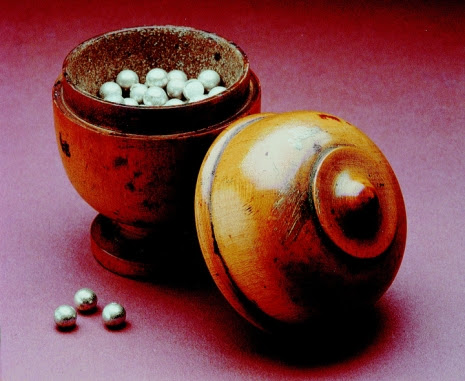
I suppose one redeeming quality of these methods was that they aided advancements in the understanding of human anatomy and the effects of illness - even if the understanding of what the body could cope with was not yet fully explored!


If you want to consume your medicines, enjoy your poison, or even check yourself for the marks of death, then view the wondrous Alchemy pieces from my handpicked suggestions! See below:


https://www.alchemyengland.com/bottle-stoppers/1730-poison.html

https://www.alchemyengland.com/rings/1100-277-sub-rosa-poison-ring.html#/4-size-l

https://www.alchemyengland.com/wall-compact-hand-mirrors/1151-victorian-mirror.html

https://www.alchemyengland.com/decorative-goblet/1844-blood-heart-goblet.html


- Rose Jekylle 🌹

Tuesday, May 24, 2022

Review: The Lighthouse

Warning - spoilers ahead!

 From the esteemed director who brought us 'The Witch,' comes another disturbing tale of 'The Lighthouse.' The film is loosely based on Welsh folklore and tells the story of two men (actors William Defoe and Robert Pattinson) who become marooned on an island while working as lighthouse keepers and start to go insane. The film leans heavily on mythological themes while exploring both sexuality, identity, and madness in midst of a nightmare scenario!


Ambience and Appeal

There is a relatively slow start to the film but immediately peculiarity and foreboding set in when Pattinson first arrives and finds the strangely carved figurine within his mattress. Is this the work of his predecessor who went crazy or an omen of a curse to come?

Uniquely, the entire film is shown in black and white, which adds incredible depth to the dramatics, enhancing the shadows and highlighting the aspects of gruesome scenes - when Pattinson brutally kills a seagull the flying blood and remains of the creature are shown as black tar! The monochrome effect also creates the impression of a tale from a different time, like an old sailor's legend. 


The lack of colour does not affect the vibrancy either - the characters seem all the more brooding and dark, and the contrast adds to the frightening dream sequences (ones that all too soon you can't tell apart from the terrifying reality)!

The music often used to accompany the scenes almost mimics ocean noises such as whale calls, foghorns, creaking structures of ships, and the echoing depths; these reach a crescendo when a horrifying image is revealed. 


The crazy conflicts

There is a massive power struggle throughout the entire film as the two men fight for the top position - namely who gets to tend the light. The light is presented as an alluring beacon that is greedily and viciously protected by Defoe and therefore becomes an incredible source of curiosity and is sought after by Pattinson. Defoe's love for the light appears obsessive and even sexual - the odd scenes portray ritualistic displays as Defoe is witnessed standing naked at the top of the lighthouse. While Pattinson has a fixation on mermaid creatures that plague his thoughts increasingly throughout the story.


At times, the fights are comical as the men bicker over silly things like old roommates - cleaning, cooking, and excessive farting! But this quickly turns sinister with violent threats and physical attacks over the possession of the lighthouse light itself, and within the brawls the two being so close they almost appear romantic, reflecting on the theme of masculine sexuality. 


Alcohol consumption also fuels the deranged situations that unfurl, in more bizarre ferocity as the story continues, and the audience is wondering how much is truly real! There are many macabre visuals depicting mermaids, dead bodies floating in the ocean, and tentacles of a monstrous creature which creates a delirious montage as bad blood increases between the characters. 

They even ingest kerosene and turpentine!  


Mythos and Lies

The director, Robert Eggers, expressed that the two characters were representative of mythological gods from Greek tales: Prometheus and Proteus. Proteus was an "old man of the sea" and keeper of knowledge while Prometheus was devious and stole fire from the gods to create mankind and thus was horrendously punished by the god Zeus - predetermining the grisly end of the film. 

The two men are lying about their true identities and seem to cling to false names, ideals and occupations that they present to the world. Defoe is assumed to be an old-time sailor complete with a false leg, superstition and tall tales while Pattinson's character is a withdrawn unassuming young man who seems to have a past to hide from. 


The acting itself is truly superb and both leads do incredible performances; Defoe's portrayal is raw and uninhibited as he completely brings life to a demented old sea dog persona, while Pattinson fully immersed himself in method acting and the result is so authentic and profound, even down to the accent and physical distress.    

A truly chilling element towards the end of the film is that you lose the sense of time passing just as the characters do as they become isolated and abandoned on the island. Does a day pass or is it weeks since they last ate rations? Who is the truly crazy one? They argue and fight accusing each other of losing their mind until the conflicts hit a deadly climax and an otherwordly experience. 


So if you are dying to add this movie to your watch list then first make sure you look at these spectacular Alchemy pieces that will showcase your passion for creepy nautical tales and myths of the great deep! 


Mammon of The Deep (P888) ~ Pendants | Alchemy England


Heart of Cthulhu (P723) ~ Pendants | Alchemy England


Kraken Hand Mirror (V75) ~ Wall, Compact & Hand Mirrors | Alchemy England


- Rose Jekylle 🌹


Saturday, April 23, 2022

The Medieval Method: Torture

The Middle Ages conjures images of impoverished peasants, filthy prison cells, and torture chambers reserved for even the most minor crimes. And those contraptions designed to extract confessions and punish sinners were created with utmost barbarity - many devices were constructed in such a way that death didn't come for hours even days. Such are the methods of an experienced torturer - to maim but not murder until what they needed was obtained! 


Large-scale Torment 

The Brazen Bull was a truly horrendous invention that literally cooked the victim alive! This device was a hollowed bronze structure and designed to resemble a huge bull with a door on the side where the prisoner was forced in. The contraption was then heated from the outside with fires until the metal became unbearably hot causing the victim to scream out in pain - the sounds were muffled due to the construction which added to the facade that the noises were made by a real bull. This passed as entertainment in medieval times!


Another large device was the Dunking stool; used on women only and typically reserved for those accused of witchcraft and prostitution, but also used to punish a "scold," a term used for a bad-tempered or even a gossipy woman! The victim would be put on display bound to a large metal or wooden chair which was attached to a long moveable beam then, as the name suggests, the chair would be dunked into a river or pond repeatedly. The duration of the submersion was decided by the torturer and the severity of the crime so, like most torture methods designed to get women to confess to witchcraft or blasphemy, death would likely come sooner than admittance of guilt.  


Tools of abuse

Thumbscrews were smaller devices but were particularly unpleasant and while they wouldn't kill they were used to cause extreme pain. Therefore, they were exceedingly effective at getting people to confess to crimes or extract information - whether or not those confessions were actually true! This tool used pressure with a wooden bar attached to three metal prongs and, using the turn of a screw, the wood would slide down the metal and slowly crush the thumbs at the bottom. Pretty nasty stuff. 

The Scolds Bridle also used pressure to torture a victim: the piece was basically an iron mask and a bridle-type tongue trap used to silence a person. This too was mostly used on women but it has also been known to be used for anyone (man or woman) who spoke blasphemy. It was a degrading form of torture designed to humiliate and cause utmost discomfort due to the restrictive design and the heavyweight of the metal. Sometimes the mouth bit would even have a spike on it that would pierce the tongue if the victim tried to speak, so this device ensured obedience. 


THE FINAL DROP

So if you managed to avoid or at the very least survive torture then, depending on the severity of the crime, you were likely to be executed! And the Middle-ages justice system didn't do this kindly, it was not what one would call a mercy killing to end your suffering.
The most honourable way of execution was beheading - seemingly a quick death but if done incorrectly, with an inexperienced executioner or just bad luck, the process could take ages as you were hacked to pieces.  
Crushing was also a brutal way of execution in which a contraption was used to crush the victim's head. Other such methods were impaling, boiling and even crucifixion!

Hung, drawn and quartered was the worst and only used for those guilty of treason. Not only were victims dragged by a horse to the gallows they were then hung by the neck (possibly breaking it in the process) until unconscious and if they didn't die then they were cut down and subjected to being carved up by disembowelment. 


Evidently, the medieval era has a long and disturbing history of degradation, pain and bizarre "crimes" but it is undoubtedly fascinating!

If you want to show your appreciation for the gruesome side of history and love for the sinister then see the intricate pieces below displaying both anguish and beauty:


Noose Around Your Neck (P932) ~ Pendants | Alclemy England


Lost Soul (P190) ~ Necklaces | Alchemy England


Marie Antoinette (P933) ~ Pendants | Alchemy England


- Rose Jekylle 🌹

Sunday, March 20, 2022

Spring Rites and Rituals

Everywhere you look you can see, smell and experience Spring finally arriving. It is a time for renewal and a fresh outlook -  and how can you celebrate and make the most of this new season?
I will give you a few ideas...


Spiritual honouring

Whether you celebrate Christian Easter, Pagan Ostara or Spring Equinox, I feel it is important to mark the occasion to connect yourself with the world around you. 

Of course, one symbology is universally associated with spring - the Easter bunny! Rabbits or hares reflect regrowth and rebirth, so adorn your home with critters such as stuffed animals, figurines, and drawings. Also, chicks and eggs are a clear symbol of new life and fertility, and perhaps the witchy side of you would like to honour your home with a simple blessing: toss crushed eggshells in the garden and recite this spell - 'for fairy, for flowers, for herbs in the bowers, the shells pass fertility with springtime showers.'


Certain fragrances are also associated with the season, so feel free to burn incense or essential oils of jasmine, rose, violet, celandine, etc. And nature has many botanical bounties to decorate your home or personal space; daffodils, lilies, acorns and strawberries are perfect for creating window displays or centrepieces as well as any wildflowers you can find on walks. 
And finally, the traditional teatime snack of hot cross buns are actually to honour the union of the sun and the earth...so get baking! 


Spring Cleaning


Herbs can be used to protect us from germs as well as freshen our homes. When the antiseptic properties were studied from the late 1900s the results were outstanding! 
You can create your own disinfectant by making an infusion of either thyme or rosemary -  pour boiling water over the herbs and then discard the herbs after approximately 10-15 mins and use the water to wipe down surfaces. 


If you want to keep the creepy crawlies at bay, windowsill plants are very useful to keep flies away as well as adding some beauty to your kitchen; plants such as sage, basil, mint, thyme are useful for this.
You can also make your own mosquito repellent simply by using almond oil (easily bought from pharmacies or big supermarkets)  and adding a few drops of essential oil and applying it to exposed skin - choose one or two oils such as eucalyptus, geranium, peppermint and citronella. Not only will it keep mozzies back but it doubles as perfume! 


Lotions and Potions


Spring is the perfect time for some R&R by making simple skin treatments and refreshing soaks. For a daytime moisturiser use 1 tsp of beeswax and 1 tsp of lanolin and melt together. Gradually warm 3 tsp of rosewater and 1 tsp almond oil and add to the mixture. Then add a sprinkling of borax (sodium borate) and stir all together until it has thickened. Once cooled, store in a jar and you can even add a few drops of your favourite essential oil for a nice scent (optional). 
You can also create a soothing cream by using dried chamomile or elder flowers - place 1 tbsp of the flowers in a jar and cover with almond oil, then melt 2 tsp lanolin and pour over the mixture. Finally, place the jar on a heatproof plate and oven cook at low temperature for about 20 mins, then drain and stir in 1 tsp honey. 
You now have your own homemade skincare! 


Herbal baths are relaxing and rejuvenating to the muscles and skin and are so easy to prepare. Use either dried (approx. 50g) or fresh herbs (approx. 100g) and a jug of boiling water (approx. 600ml) and let the herbs soak. After 30 mins use a sieve to drain the infusion and then add to bathwater. For different properties use the following suggestions: chamomile for relaxation, mint for healing, rosemary for relieving fatigue, sage for stimulating. 


(All ingredients are easily obtained either from pharmacies/body shops or cheaply online). 


You can show off your new love for spring by wearing green with Alchemy's The Green Goddess pendant, or enliven your home with a beautiful hanging ornament. And not forgetting a fresh cup of herbal tea with a tea-for-one set. See the wonderful pieces below:


So now you can enter spring feeling like a new you and ready to enjoy those sunny days!
- Rose Jekylle 🌹

Tuesday, February 15, 2022

The Tale of the Vampire

The vampire is known to anyone who has ever opened a book or seen a film - characterised typically by a lust for blood or flesh, sharp fangs, and an undead form. 

From the teen heartthrobs of Twilight to the kickass creatures of Blade, vampires have been part of modern fantasy and fiction. But could there be any truth to the original stories? Are these tales purely the work of frightful imagination or is there any real evidence of the vampire accounts? 

As usual, it starts with superstition...

(Dracula - Hammer Horror film 1958)


Undead Rising

The fear of the dead rising from their graves seems to be a superstition that stems from ancient times.

Going back as far as the Neanderthals, our ancestors would tie the knees of their dead to their chests as part of ritualistic practice. Seeing as the act of burying/cremating would have been a considerable feat, it seems that this could be a preventative measure to stop the dead from walking.

And of course, the ancient Egyptians were famously known for taking great care to ensure their dead passed peacefully and righteously into the afterlife. It was believed that the health of the soul relied on the well-being of the physical body and therefore if post-mortem measures were not taken with the utmost care then there would be dire consequences - vampirism.


The Pharaohs were even buried with a book that contained guideline instructions to ensure the soul reached the afterlife - they also believed in a part of the soul known as the ka that would rise from the tomb if the correct offerings were not left. This entity is thought to attack the living and even drain their blood!


Vampire accounts

The earliest written records of vampires date back to the Babylonians and Assyrians in c.2000 BC, who believed in vengeful vampire creatures that terrorised the living. The evidence was also shown in images on cylinders seals; one of such shows a vampire bearing down on a sleeping victim while another man brandishes a weapon against the creature.


During the centuries that followed, there were increased vampire reports, the terrifying revenants ranging from peasants to priests! One in particular gave new "life" to the vampiric image; Gilles de Rais, a nobleman no less, was guilty of savage crimes that included cannibalism and conjuring evil spirits. Although not an undead creature himself, this case was unusual and distinctive due to his nobility and thus added momentum to a new image of an aristocratic vampire.

 (Interview with the Vampire 1994 film)


Countess Elizabeth Bathory too was a person of high society that partook in vampiric blood lust; she tortured young virgin girls and then would bathe in their blood in a bizarre attempt to retain her youth.


There have also been reports from the Spanish conquistadors claiming that they witnessed vampires on their travels, and even men of science in the 1700s wrote books that explained the habits of the undead, e.g. Dissertation of the Bloodsucking Dead (1732, Johann Hertel).

Even as late as the nineteenth century, serial killers gained their vampire infamy due to their insatiable obsessions with flesh and blood; Fritz Haarmann killed his victims by mutilation and biting into their necks. There was also Peter Kurten who sliced the throats of his victims and claimed to have craved their blood as an alcoholic craves liquor.


It seems that the vampire is an adaptive and multifaceted being and whether dead or alive, seeking blood or other living sustenance, it is most dangerous!

See below Alchemy's creations that reflect the beauty and terror of the monstrous fiend:


Nosferatu's Rest (P183) ~ Pendants | Alchemy England


Batheart - The Vampire's Kiss (P900) ~ Pendants | Alchemy England


Vampire Blood (RGBS1) ~ Bottle Stoppers | Alchemy England


- Rose Jekylle 🌹


Tuesday, December 21, 2021

Krampus: The dark side of Christmas

Who is Krampus

Krampus is a less well-known figure associated with the Christmas holiday - while St Nicholas rewards the good children, Krampus punishes the bad! 

Depicted as a horned and hoofed beast, this frightening figure is originally from Central and Eastern Alpine folklore and is used to warn children that they had better behave unless they want Krampus to come for them! The name also is derived from the German word "Claw" which sounds like it would give nightmares to both children and adults alike. He has even been called the "Christmas Devil" and some cultures still believe in him today.   


The legend itself is centuries old, dating back to the 12th Century as a German Christmas tradition and seems to have traits relating to many different beliefs. The creature is even said to be the son of Hel, the Norse god of the Underworld and the image of Krampus has similar features and attributes to Greek mythological beings. 


What if you have been naughty..?

Then Krampus will be visiting you. According to the myths, Krampus accompanies St Nicholas and uses birch rods to beat misbehaving children into being good  - however, he has also been known to steal some children if they are just too naughty and take them to the Underworld! 

But you do get chances to amend your ways; Krampus first visits with a warning. Those who believe will leave a boot out on December 5, known as Krampusnacht "Krampus Night", and the next day on December 6, Nikolaustag "St Nicholas Day," either a rewarding present will be left or a whipping rod as punishment. 

In the olden days, some Austrian families have been known to leave birch rods up as decoration all year round as a warning for children to behave!


Modern Krampus

These days more people are interested in celebrating the festive season the non-traditional way so new events and practices are created.

One such event is the Krampus Run - a ridiculous but fun festival where people dress as devils shaking chains and cowbells while they chase tourists through the street with rods!

There are also many cinematic versions of Krampus made,  these often lean towards the horror theme when showing the ancient Christmas figure. One that sticks in my mind is the 2015 interpretation in which Krampus is portrayed as a truly terrifying monster that is supported by a riotous mob of minions made up of murderous elves, giant possessed toys and evil gingerbread men! Both sinister and hilarious!


Unbelievably, there are also children's books about the devilish character although definitely not as frightening as the true myths. "Goodnight Krampus" is a Yule present I got for my toddler which shows Krampus as a naughty elf who won't go to sleep on Christmas Eve - very much a different take on the creepy creature of Germanic folklore! 


If you are interested in the more disturbing Christmas legends and prefer to celebrate the darker side of the festive season then look for the less conventional gifts for family and friends.

These pieces below by Alchemy are not only perfect for those who appreciate the more gruesome and twisted fairy tales, but they are also ideal stocking fillers! 

The Demon Drink (CC1) ~ Individual Coasters | Alchemy England 


Merry Yuletide!

- Rose Jekylle 🌹


Alchemy dates

  In 2025, the Chinese Lunar New Year falls on  January 29, 2025 , marking the beginning of the Year of the Wood Snake. This festival is cel...